



News and Events 
Forthcoming
29/10/2026 13:30
Pedro Nunes Lectures 2026
Anfiteatro Abreu Faro, Complexo Interdisciplinar, Instituto Superior Técnico, Lisboa, Portugal

The 2026 Pedro Nunes Lectures, organised by the International Centre for Mathematics - CIM, will be delivered by Ulrike Tillmann FRS, Professor of Mathematics at the University of Oxford and President-elect of the International Mathematical Union. A leading figure in algebraic topology, moduli spaces and, more recently, topological data analysis, Ulrike Tillmann will give two lectures in Braga and Lisbon.
Ulrike Tillmann will give the lecture “TQFTs and the renaissance of the algebraic topology of manifolds”, exploring connections between topological quantum field theories, cobordism and the algebraic topology of manifolds.
18/01/2027 — 22/01/2027
Large N: Resurgent vs Erratic? at CERN
CERN
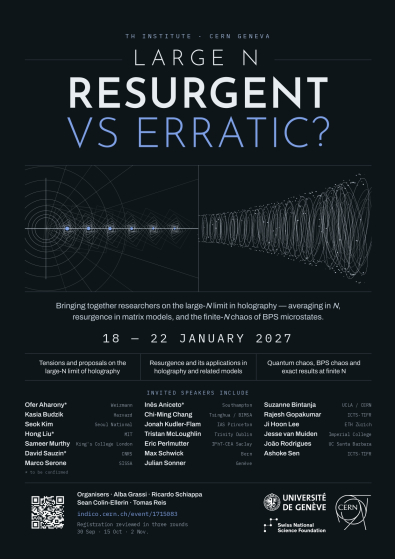
CERN in Geneva will host the conference Large N: Resurgent vs Erratic?, devoted to the large-N limit in holography, resurgence in matrix models, and quantum chaos in BPS microstates. The meeting will bring together researchers from several international institutions.
Ricardo Schiappa, Professor at the Department of Mathematics of Instituto Superior Técnico, is among the organisers, together with Alba Grassi, Sean Colin-Ellerin and Tomas Reis. More information and registration: https://indico.cern.ch/event/1715083/
19/01/2027 — 21/01/2027
Iberian Strings 2027
Instituto Superior Técnico
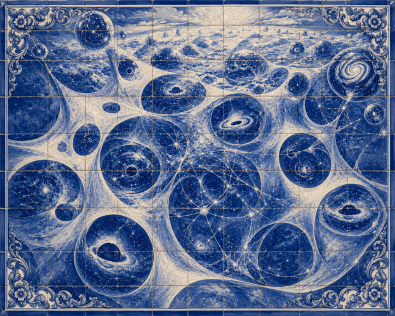
We are pleased to announce Iberian Strings 2027, the nineteenth edition of the long-running conference series continuing the tradition of the former Workshop on Gravitational Aspects of Strings and Branes and Northwest Strings meetings. The conference brings together the string theory community across Spain and Portugal, along with international researchers, to explore recent breakthroughs in string theory and related fields at the cutting edge of high-energy physics and mathematics. For full event details and registration, please visit the official Iberian Strings 2027 webpage.
14/04/2027 — 16/04/2027
IberiCos 2027 at Técnico
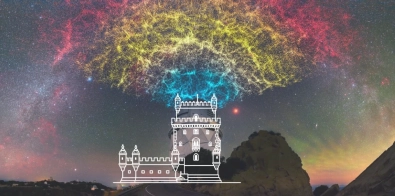
The meeting aims to foster interaction and collaboration among researchers in Cosmology and related areas, covering topics ranging from mathematical cosmology and theoretical particle physics to observational astrophysics.
The local organising committee includes Artur Alho and Rita Soares, while José Natário and Filipe Mena serve on the scientific committee.
19/07/2027 — 22/07/2027
Global Portuguese Mathematicians 2027
Universidade de Aveiro

The Department of Mathematics of the University of Aveiro will host the Global Portuguese Mathematicians 2027 meeting. The scientific programme includes twelve invited lectures and six thematic sessions covering a broad range of areas in Mathematics.
Held every two years since 2017, the meeting brings together Portuguese mathematicians working in Portugal and abroad, as well as researchers with close scientific ties to Portugal. The 2027 edition marks the tenth anniversary of the series and includes CAMGSD among the research centres involved in its scientific activities. More information: https://sites.google.com/view/gpm27/home
Past academic defenses...
News
22/10/2026
Mathematical models shed light on the vaginal microbiome

A team from Instituto Superior Técnico led by Erida Gjini, a researcher at CEMAT, is studying how the composition of the vaginal microbiome influences its resistance to invasion by potentially harmful microorganisms. The work, which also involves Mathematics PhD student Tomás Freire and Marina Garcia-Romero, uses mathematical models to relate microbial diversity and interactions to states of health and disease.
The first results have been published in the journal Microbiome and show how models based on replicator dynamics can help uncover the ecological mechanisms associated with bacterial vaginosis and resistance to infection. The same approach may also be applicable to other microbiomes and multispecies biological systems.
09/10/2026
Terence Tao: Math 2.0
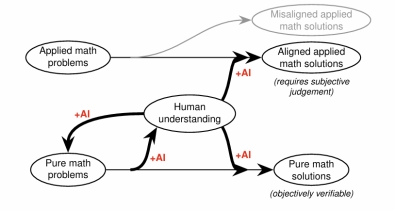
In a recent public lecture at Caltech, Terence Tao presents his vision for “Math 2.0”: a phase of mathematics in which AI’s growing ability to solve problems should be accompanied by a shift in focus from merely producing solutions towards strengthening human understanding, generating new ideas, and exploring the mathematical landscape. Tao also stresses that applications of mathematics to the real world require human judgement and can lead to misaligned solutions if automation replaces understanding.
Tao’s proposal is therefore not to diminish the role of mathematicians, but to broaden the ways in which AI can support research and understanding: “The more sustainable ‘Math 2.0’ use of AI would be to strengthen all the ways in which human understanding interacts with mathematics.” math-2-0-caltech-2026 The slides from the Math 2.0 lecture and an updated living summary of Terence Tao’s views on AI and mathematics are available online.
19/09/2026
Carolina Figueiredo awarded the Vera Rubin New Frontiers Prize
Carolina Figueiredo, a former student of the Master's Programme in Applied Mathematics and Computation (MMAC) at Instituto Superior Técnico, was named in 2026 as the inaugural recipient of the Vera Rubin New Frontiers Prize, awarded by the Breakthrough Prize Foundation.
The prize recognizes her contributions to the geometric structure of scattering amplitudes, revealing unexpected connections between different quantum field theories. The featured video introduces Carolina Figueiredo and some of the ideas underlying this work, in which geometric structures provide new ways of reformulating and simplifying fundamental problems in particle physics.
Carolina Figueiredo's connection with Mathematics at Técnico began while she was still an undergraduate student. In 2018/19, she was a fellow of the Novos Talentos em Matemática programme of the Calouste Gulbenkian Foundation, under the mentorship of José Natário, Full Professor in the Department of Mathematics. The work developed in this context, on Riemannian manifolds dual to static spacetimes, subsequently led to a research paper co-authored with José Natário.
22/09/2026
Mathematics Department researchers participate in European project to improve the response to future pandemics
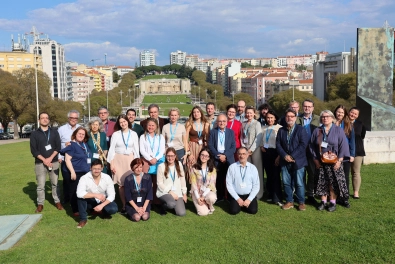
Researchers from CAMGSD — Center for Mathematical Analysis, Geometry and Dynamical Systems — and CEMAT — Center for Computational and Stochastic Mathematics — are participating in the European EUVABECO (European Vaccination Beyond COVID) project, funded by the EU4Health programme. The project brings together universities, health authorities, governmental organisations and industry partners from several European countries to strengthen preparedness and response to future pandemics and public health crises.
The Técnico team includes, from CAMGSD, João Costa, José Mourão, Henrique Oliveira, Luís Carvalho, Rita Soares and Gonçalo Oliveira, and, from CEMAT, Conceição Amado, Erida Gjini, Jorge Tiago and M. Rosário Oliveira, who coordinates Técnico’s participation. Several Master’s students and graduates, as well as a postdoctoral researcher, are also involved.
Técnico’s contribution focuses on developing and testing mathematical models and epidemiological forecasting tools, including forecasts of infection rates, hospitalisations, intensive care admissions and mortality, and the assessment of different vaccination strategies. In March 2026, Técnico also hosted an in-person meeting of the EUVABECO consortium.
12/09/2026
Joint Declaration on Mathematics and Artificial Intelligence
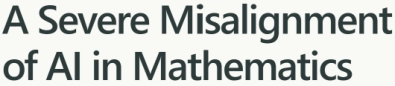
A group of Fields Medalists and leading international mathematicians has launched a joint declaration on Mathematics and Artificial Intelligence, available at mathandai.org. The initiative addresses the growing impact of frontier AI systems on mathematical research, emphasizing that solving problems serves as a pathway toward deep conceptual understanding and human insight rather than merely an optimization benchmark. Highlighting the values of intellectual transparency, credit attribution, and the nurturing of future researchers, the declaration invites members of the broader scientific community to review the statement and join as signatories.
03/09/2026
Secretarial support to centers CAMGSD, CEMAT, GFM

Description of the information/documents to be submitted for Acquisitions/Missions/Reimbursements.
13/09/2026
Clay Mathematics Institute Statement on the Navier-Stokes Existence and Smoothness Problem

A recent statement released by the Clay Mathematics Institute (CMI) on September 11, 2026, addresses the reported resolution of the Navier-Stokes Millennium Prize Problem. Concerning the long-standing question of the existence and smoothness of solutions in three-dimensional space, a fundamental cornerstone of mathematical fluid dynamics, the Institute expressed shared excitement with the international mathematical community while emphasizing that the formal evaluation and verification process governed by the Millennium Prize rules will proceed deliberately.
31/08/2026
In memoriam: João Amaral
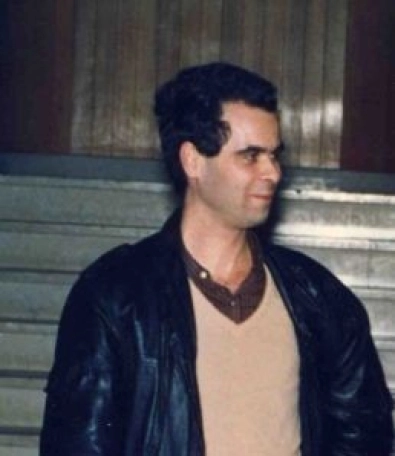
João Amaral foi Professor Auxiliar do Departamento de Matemática do Instituto Superior Técnico, onde desenvolveu grande parte da sua vida profissional dedicada ao ensino, desde cursos de licenciatura, mestrado e doutoramento. Doutorou-se em Matemática pela Universidade de Oxford, em 1986, sob a orientação de John Gittins, e a sua atividade científica desenvolveu-se sobretudo nas áreas da Teoria das Probabilidades e dos Processos Estocásticos.
Em 1993 foi um dos membros envolvidos na criação do grupo de Probabilidades e Estatística do IST, que viria a desempenhar um papel importante na atividade de lecionação e investigação do Departamento. Ao longo dos anos lecionou diversas unidades curriculares, tanto de licenciatura — entre elas Probabilidade, Processos Estocásticos, Probabilidade e Estatística, Introdução às Probabilidades e Estatística, e Teoria da Decisão — como de mestrado - Decisão, Risco e Previsão. Reformou-se em 2020, depois de muitos anos de dedicação ao Instituto Superior Técnico.
A sua passagem por Oxford foi uma etapa marcante da sua formação matemática. Trabalhar com John Gittins permitiu-lhe integrar um ambiente científico internacional de excelência e contactar de perto com problemas onde a Probabilidade, os Processos Estocásticos e a decisão sob incerteza se cruzavam. Essa colaboração prolongou-se para além do doutoramento. No prefácio do seu livro Multi-Armed Bandit Allocation Indices, publicado em 1989, Gittins agradece expressamente a João Amaral pelo importante trabalho desenvolvido no cálculo dos índices que estão no centro daquela teoria. Além do significado científico desse reconhecimento, ele dá-nos também uma imagem do jovem matemático que, no início da sua carreira, já participava ativamente em investigação de grande exigência e relevância.
Mas a contribuição de João Amaral para o Departamento não se resume à sua atividade nas disciplinas que lecionou. Para quem teve o privilégio de trabalhar com ele, João Amaral era uma presença muito própria e marcante. É impossível esquecer a sua inteligência, o seu sentido de humor acutilante e a eficiência com que abordava os problemas. Nas muito participadas reuniões de organização de serviço da Unidade de Ensino de Probabilidades e Estatística, as suas intervenções eram frequentemente fulcrais, sempre pautadas pelo bom senso e por uma capacidade muito particular de ir diretamente ao essencial.
Também como professor deixou a sua marca em várias gerações de estudantes. Quem frequentou Probabilidade no ano letivo de 1987/88 dificilmente esquecerá, por exemplo, a aula sobre funções de Baire e a forma como estas permitem estabelecer uma ligação profunda entre a topologia, a teoria da medida e a probabilidade.
São momentos como este que ajudam a compreender o que significa ensinar Matemática: não apenas transmitir resultados, mas revelar a estrutura e a beleza que existem por detrás deles.
Além da Matemática, ficam as conversas, as discussões, os momentos partilhados e tantas pequenas histórias do quotidiano. É talvez essa dimensão pessoal que mais sentimos quando perdemos alguém que fez parte da nossa vida. Não recordamos apenas aquilo que essa pessoa fez, mas também a forma como a sua presença se tornou parte da nossa própria história. João Amaral foi uma presença importante na história do Departamento de Matemática do IST. A sua contribuição para a Matemática, para o ensino e para o Instituto Superior Técnico permanecerá, mas permanecerão também as memórias daqueles que tiveram a sorte de o conhecer.
Recordaremos o João Amaral com amizade, carinho e gratidão. Sentiremos a falta da sua presença entre nós.
12/05/2026
In memoriam: Carlos Rocha
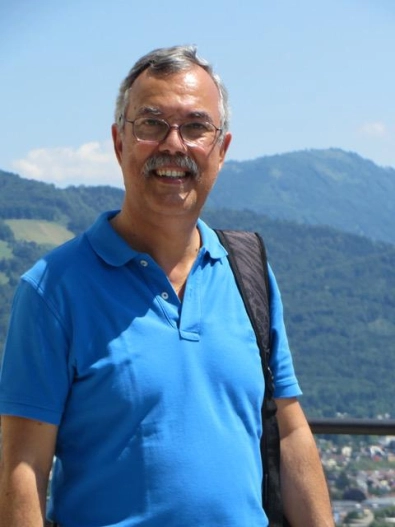
Licenciado em Engenharia Electrotécnica (1975) pelo Instituto Superior Técnico (IST), Universidade Técnica de Lisboa; MSc in Applied Mathematics (1983) and PhD in Applied Mathematics (1985) by Brown University; Agregação em Matemática no IST (1994).
Foi docente de matemática no IST desde 1972: Monitor no Gabinete de Análise Numérica dirigido pelo Professor Eduardo Arantes e Oliveira antes da constituição dos departamentos no IST (1972-77), altura em que foi co-autor do texto Valores e Vectores Próprios de Matrizes Reais, que incluiu programas de cálculo numérico com vários métodos, publicado pelo IST e pelo Instituto Gulbenkian de Ciência (IGC); Assistente Eventual das disciplinas Matemática Aplicada à Electrotecnia I e II (1977-79); Assistente em disciplinas de matemática (1979-86) integrando o Departamento de Matemática quando os departamentos do IST foram constituídos em 1980; Professor Auxiliar (1986-89); Professor Associado (1989-95); Professor Catedrático (1995 -2020), altura em que se reformou embora tenha mantido a ligação ao IST com um Contracto de Associação.
Foi Assistente de Investigação no Laboratório de Fisiologia do IGC (1975-79); Research Assistant (1981-85, 1984-85) and Teaching Assistant at the Division of Applied Mathematics, Brown University, USA (1983-84); Visiting Fellow of the Institute of Mathematics and Its Applications, University of Minnesota; USA (1989); membro do Centro de Matemática e Aplicações Fundamentais do Instituto nacional de Investigação Científica (INIC) (1985-88) e do Centro de Análise e Processamento de Sinais do INIC (1985-94) em linhas essencialmente com docentes do IST criadas e coordenadas por Luís Magalhães
Também foi membro do Centro de Análise Matemática Sistemas Dinâmicos e Aplicações do IST (1991-97) que mudou de nome para Centro de Análise Matemática, Sistemas Dinâmicos e Geometria em 1997 por proposta de Luis Magalhães que o coordenou assim como as linhas de investigação que lhe deram origem desde 1984, tendo Carlos Rocha assumido pouco depois a coordenação deste Centro, por mais de 22 anos, até 2020 pouco antes de se aposentar. Neste longo período manteve neste Centro um ambiente acolhedor, internacionalizado e dinâmico que contribuiu para a consolidação da carreira dos seus membros e dos muitos pós-doutorandos ou outros investigadores que acolheu e apoiou, e para esta ser a única Unidade de I&D em Matemática do país classificada com Excelente em todas as avaliações promovidas pela Fundação para a Ciência e a Tecnologia.
Foi Presidente do Departamento de Matemática do IST de 1997 a 2001, e membro do Conselho Científico do IST e do Senado da Universidade de Lisboa, ambos de 2017 a 2020.
Durante mais de duas décadas foi chamado a participar em muitos júris de concursos para professores de matemática nas várias universidades portuguesas, o que acabou por ser uma ocupação que exigiu um esforço intenso a que nunca se furtou e revelou a grande confiança de apreciação académica rigorosa e justa que tinha entre colegas das outras universidades do país.
Nas funções dirigentes referidas revelou qualidades excepcionais de ponderação, estratégia e concretização, pautando-se sempre por fortes princípios éticos e por abertura a diferentes formas de pensar e agir.
A sua actividade de investigação centrou-se em análise matemática, equações diferenciais e sistemas dinâmicos de dimensão infinita, com ênfase em equações diferenciais parciais parabólicas de reacção-difusão, tendo contribuído decisivamente, principalmente em colaboração com Bernold Fiedler, para caracterizações topológicas e combinatórias do atractor marcadamente inovadoras, aspectos de transversalidade de variedades invariantes e estabilidade estrutural deste tipo de sistemas dissipativos e de sistemas definidos por equações diferenciais com atraso infinito, destacando-se também as colaborações frutuosas com Waldyr Oliva e Giorgio Fusco.
O Carlos Rocha marcou a vida do Departamento de Matemática do IST e de todos os colegas e alunos que tiveram o privilégio do seu convívio nos 46 anos em que pudemos contar com a suas capacidades, profissionalismo, empenho e entusiasmo, sem esquecer a sua permanente boa disposição, realismo, e uma capacidade de síntese que foi muito útil para várias decisões académicas cruciais no período inicial de desenvolvimento da componente de investigação no Departamento de Matemática do IST, mesmo quando eram concretizadas por outros dos seus colegas mais próximos. Estas suas qualidades já eram evidentes quando, ainda aluno do IST, fez parte da equipa de jovens investigadores (Luis Magalhães, Manuel Ricou, Carlos Rocha, Francisco Teixeira e Amarino Lebre que prosseguiram carreira no Departamento de Matemática do IST, António Pascoal e Carlos Alegria que integraram o Departamento de Eng. Electrotécnica e de Computadores do IST, e ainda o médico Pedro Costa, a bióloga Maria Ana Santos e o engenheiro licenciado no IST Pedro Fernandes) no Laboratório de Fisiologia do IGC acima referido, onde uma iniciativa pioneira dos dirigentes visionários Hugo Gil Ferreira e Kelo Correia da Silva integrava alunos universitários, engenheiros, biólogos e médicos em projectos de investigação na então nascente área da Biomecânica e dos associados processos de controlo e processamento neuronal. Nesta equipa exerceu várias tarefas, entre as quais a utilização precoce de splines na descrição numérica de caixas toráxicas para apoio à modelação do associado controlo neuromuscular em relação com dados electromiográficos dessa função digitalizados em tempo real a partir de experiências realizadas no Laboratório, e um sistema de aquisição de dados electromiográficos multicanal, com multiplexagem de 32 canais, e registo digital em banda magnética em tempo real que exigiu grande sofisticação técnica atendendo à necessidade de compatibilização da frequência de amostragem necessária e das restrições temporais da gravação magnética com um computador de 8K de RAM e palavras de 16 bits, que era uma potente e rara máquina na altura. Este trabalho, publicado em 1980 no Medical & Biological Engineering & Computing Journal, foi pioneiro mundialmente de electromiografia multicanal, quando em geral se registavam dados de só um canal e, raramente, de dois canais, limitando seriamente a descrição da actividade neuromuscular de todo o sistema.
O Carlos foi sobretudo um amigo e colega ímpar pelas suas qualidades profissionais e humanas, de solidariedade e disponibilidade para apoiar outros, com grande inteligência e inquebrável integridade, simplicidade e modéstia, e apurado espírito crítico e grande sentido de humor, enfrentando e resolvendo situações complexas com serenidade e pragmatismo. Enfrentou a doença que agora o venceu com coragem e tenacidade exemplares e, mesmo depois de reformado por indicação médica, manteve intensa produção científica com o seu habitual entusiasmo, empenho e virtuosismo técnico. Será para sempre lembrado com muita saudade, mas deixa também uma enorme satisfação em quem teve a sorte de cruzar caminhos na vida com alguém como ele.
14/07/2023
Discover Math@Técnico
Hugo Tavares, vice-president of the Mathematics Department, tells us about Math@Técnico.
Past highlighted videos...
Talks
28/10/2026 14:30 New schedule
Persi Diaconis
Riffle shuffling, overhand shuffling, and "smooshing" cards around a table (II)
28/10/2026 16:00
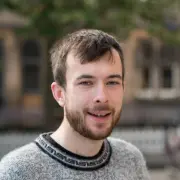 Patrick Kinnear
Defects in TQFT and skein theory
29/10/2026 15:30 New schedule
Persi Diaconis
Riffle shuffling, overhand shuffling, and "smooshing" cards around a table (III)
30/10/2026 11:00
 Leah Schätzler
Time-dependent boundary data for equations of parabolic $p$-Laplace type in noncylindrical domains
03/11/2026 15:00
 Thibault Langlais
Degenerations of exotic Calabi-Yau metrics through Atiyah's flop
05/11/2026 15:00
Thomas Borsoni
Convex extensions and optimal transport
06/11/2026 11:00
 Gevorg Mnatsakanyan
Baxter's theorem and possibilities of its quantitative variants
17/11/2026 15:00
 Juan Muñoz-Echániz
To be announced
19/11/2026 12:45
20/11/2026 11:00
Francesco Bozzola
To be announced
25/11/2026 16:00
Aleksander Ivanov
To be announced
27/11/2026 10:00
 Francisco Berkemeier
Fourier neural operators for understanding DNA replication